
UX Designer
A UX designer is responsible for how a product feels to use. They shape the structure, flow, and logic of the experience so a user can accomplish what they came to do without friction, confusion, or wasted effort.
What is a UX Designer?
A UX designer owns how a product feels to use. Where a visual designer decides what the interface looks like, the UX designer decides how it works: the sequence of steps, the structure underneath the surface, and the decisions about what a user should see and when.
The term traces to Don Norman, the cognitive scientist who coined "user experience" at Apple in the early 1990s and defined it as everything that touches a person's experience with a product, including the parts that have nothing to do with using it directly. For a UX designer, that means the job is broader than any single screen. It is every point where a user meets the product, how each one feels, and how to make it better.
UX is not the same as UI. UI design is the visual layer: the components, typography, and color. UX is the logic beneath it. A product can be beautiful and still fail on experience. For the concept itself, see user experience.
What Does a UX Designer Do?
Research the user. UX designers run interviews, usability tests, and behavioral analysis to learn how people actually use a product rather than how the team assumes they do. This work overlaps heavily with user research.
Map the flows. Trace the paths a user takes to complete a task. Where do they enter, what decisions do they face, and where do they abandon the attempt?
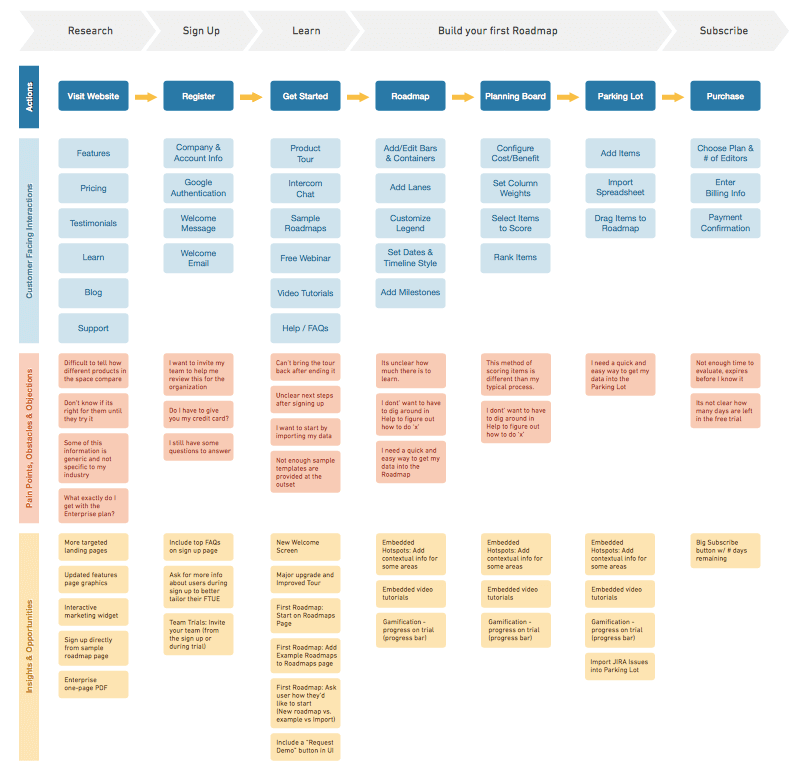
Build the artifacts. Wireframes, information architecture, prototypes, and customer journey maps. These are thinking tools before they are deliverables: they make a proposed experience concrete enough to critique before anyone writes code.
Test and iterate. Put the design in front of real users, watch what breaks, and revise. UX designers sit closer to real user behavior than almost any other role, which makes them a critical evidence source for the roadmap.
UX Designer vs. Product Manager
This is the boundary that confuses product teams, and it is worth stating plainly.
The product manager decides which problem the team solves and why it matters to the business. The UX designer decides how the solution works from the user's point of view.
A reasonable question follows: if the PM already advocates for the user, why not have them own the experience too? Because a product manager has competing agendas that a UX designer does not. The PM is also accountable for the business case, engineering constraints, and the release timeline, and under that pressure the user's experience is the thing most easily compromised. A dedicated UX designer exists to hold that ground. The two roles are collaborators, not substitutes, and the strongest product teams run them in parallel from the start of product discovery, not in sequence.
How Is AI Changing the UX Designer Role?
AI is compressing the production stage of UX work. Generating wireframe variations, drafting interface copy, and spinning up prototypes now takes a fraction of the time it once did, which lets designers test more directions faster.
What AI does not do is decide which direction is right. Choosing the flow that actually fits how a user thinks is a judgment grounded in research, and it remains the designer's to make. AI produces more options. It does not tell you which one is worth shipping.
Why UX Designers Matter to Product Teams
A prioritized roadmap full of the right features can still ship a product nobody wants to use. UX is the discipline that closes the gap between building the correct thing and letting people actually get value from it. Teams that treat UX as a downstream styling function tend to discover the cost of that assumption after launch, when the usage numbers come in low and no one can say why.
Additional Resources on UX Design
- How to Create a UX/UI Roadmap
- What Is Product Design?
- Intuitive Design
- The Ultimate Guide to Product Management
Related terms: User Experience / Product Designer / Product Manager / Usability Testing / User Research / Persona / AI for Product Management
Your next roadmap starts here.


.svg)