
Product Planning Software for Insurance Companies
From lean insurtech companies to the largest carriers, ProductPlan gives insurance product teams the clarity to decide what to build and the alignment to ship it.

"ProductPlan gives our compliance, actuarial, and product teams one place to see what's shipping, what's waiting, and why.
-Head of Product, Insurance Carrier
Trusted by insurrance carrier product teams to simplify launches and stay compliant.












How ProductPlan Helps Insurance Teams Plan and Launch Complex Products
Insurance product portfolios span customer-facing portals, underwriting systems, claims platforms, and regulatory tools. ProductPlan helps teams coordinate engineering, actuarial, and compliance timelines so every launch stays aligned.

Compliance Alignment
Faster Product Releases
Actuarial & Filing Coordination
Claims & Regulatory Tracking
Portfolio Visibility
Keep compliance and development moving together.
Ship customer and agent experiences on schedule.
Align pricing models and rate filings with product delivery.
Build claims compliance into development from the start.
Manage complex insurance platforms in one view.
Outcome:
Outcome:
Outcome:
Outcome:
Outcome:

The Realities Facing Insurance Product Teams
Insurance product teams juggle policyholder portals, underwriting platforms, claims and FNOL tools, and compliance workflows, all while navigating regulatory gates, actuarial approvals, and legal sign-offs.
Most delays don't happen in engineering. They happen when teams work from disconnected plans.
- NAIC or legal reviews arrive without advance visibility, stalling portal launches
- Underwriting models and agent-facing UI ship on separate timelines
- Missed state filing windows delay products by months
- Disconnected roadmaps leave PMs and actuaries working from different plans
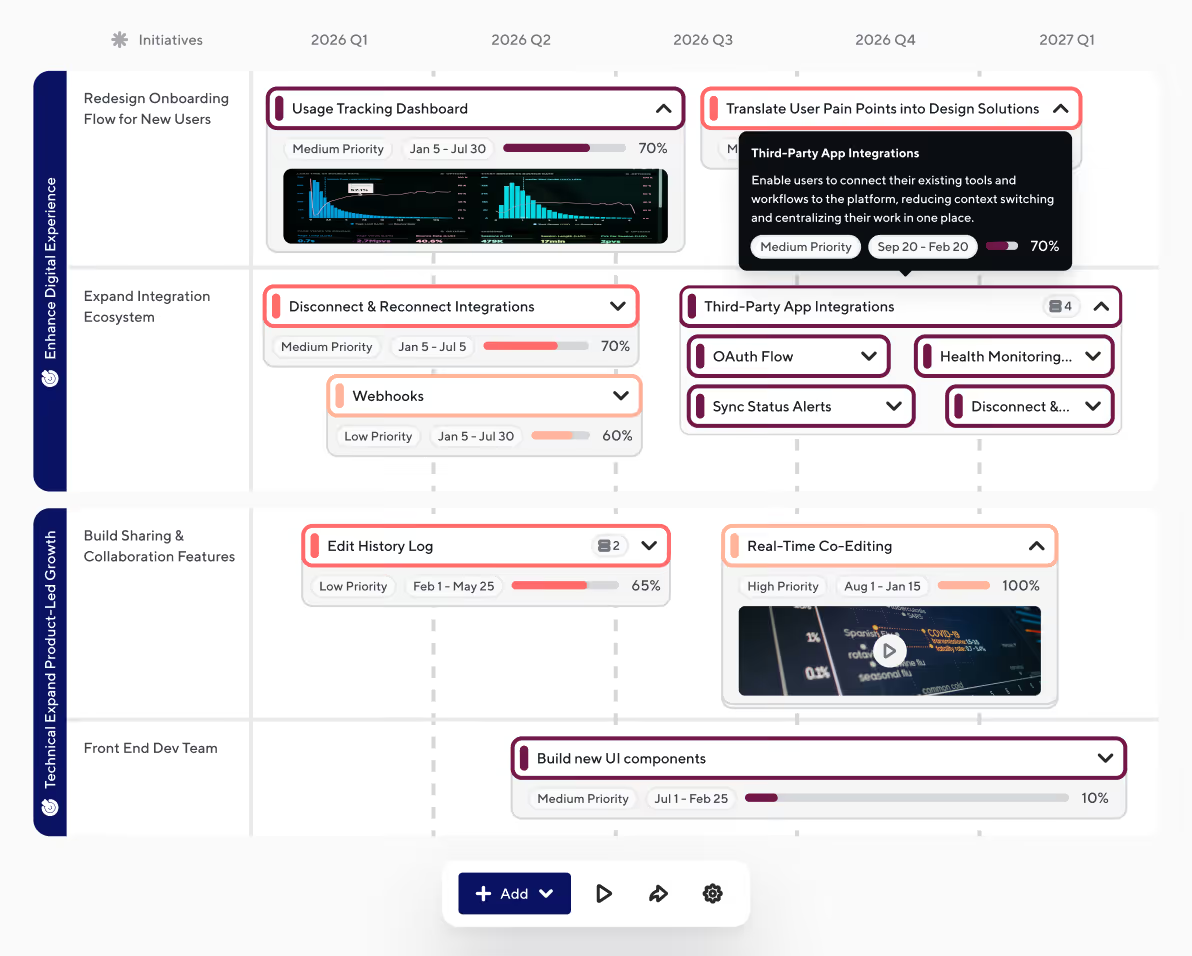
ProductPlan gives insurance product teams one connected place that integrates regulatory and actuarial milestones, aligns engineering, product, and compliance teams, and enables parallel planning so launches stay on schedule.
40%
49%
72%
What Insurance Teams Gain with ProductPlan
Faster Launches — Policyholder portals, underwriting platforms, and claims tools ship months sooner when compliance and engineering move together.
Compliance Confidence — NAIC filings, state reviews, and legal approvals are planned and tracked alongside development. Teams move forward knowing every milestone is visible.
Full Portfolio Visibility — Every stakeholder, from executives to actuaries and PMs, gets the view that's built for them, all from a single source.
Evidence-Backed Decisions — ProductPlan's Product Intelligence connects policyholder and agent feedback directly to roadmap priorities, so every decision is backed by real customer signals.
Less Rework — Actuarial and compliance milestones are visible early so teams plan around them before they affect delivery.
Portfolio Alignment — Policyholder portals, FNOL tools, and underwriting systems are managed in one place.

ProductPlan vs. Aha!, Productboard & Jira for Insurance Teams
Insurance product teams often experiment with multiple product management tools, but not all solutions are built to handle regulated, multi-stakeholder environments. ProductPlan focuses on the capabilities that matter most for carriers: compliance milestone visibility, cross-team alignment, and visibility for executives and actuaries.
CAPABILITY | .svg) |  | %201.svg) |  | |
Plan compliance and actuarial milestones alongside delivery work | .svg) Native | .svg) Partial, requires significant setup | .svg) No | Partial | |
Accessible to non-engineering stakeholders without training (actuarial, legal) | Yes | Partial, steep learning curve | No, engineering-first | Partial, feedback-first UX | |
Audience-specific views for executives and board | Native | Yes, with setup | No | Partial | |
Cross-functional roadmap spanning product, actuarial, and legal teams | Native | Yes, complex configuration required | No | Partial | |
Built-in AI-moderated policyholder and agent research surveys | Native | No | No | No | |
Time to first cross-functional insurance roadmap | Days | Weeks | Months | Weeks | |
Frequently Asked Questions from Insurance & Insurtech Teams
Yes. Insurance carrier teams often choose ProductPlan specifically for this reason. ProductPlan allows teams to create dedicated roadmap lanes for actuarial review, state filings, and legal sign-offs alongside engineering work. For insurtech teams encountering these cycles for the first time as they scale, ProductPlan makes regulatory complexity visible and manageable before it becomes a blocker.
ProductPlan is designed for stakeholders who don't consider themselves product managers. Actuaries and legal teams typically don't want to manage Jira tickets or learn complex product workflows. Instead, they see a clear visual roadmap highlighting the milestones relevant to their review cycles. Many insurance teams find that actuarial and legal stakeholders begin using the roadmap quickly because it shows exactly when their input will be needed before work becomes urgent.
Yes. State filing deadlines can be mapped as fixed or flexible milestones on the roadmap so product initiatives are planned around them. Teams can quickly see which initiatives align with upcoming filing windows and which may conflict with regulatory timelines. Many carriers create a dedicated compliance lane owned by the compliance team, giving product and compliance a shared planning view.
Coordination across these teams is one of the biggest challenges for insurance product organizations. Product teams plan features, actuarial teams manage model approvals and rate filings, and compliance teams track regulatory requirements across multiple states. ProductPlan helps carriers coordinate these groups by mapping each function's milestones directly into the roadmap. Engineering work, actuarial approvals, and regulatory deadlines appear together so teams can plan in parallel rather than discovering dependencies late in the release cycle.
ProductPlan works alongside Jira rather than replacing it. Engineering teams continue managing development work in Jira, while ProductPlan serves as the strategic roadmap layer that connects sprint-level work to business, actuarial, and compliance timelines. Status updates from Jira automatically appear in ProductPlan so the roadmap stays current without manual updates.
While Aha! is a strong tool for software teams managing complex requirements, insurance carriers typically choose ProductPlan for three reasons: easier participation for non-engineering stakeholders such as actuaries and compliance teams, faster setup for cross-functional roadmaps, and flexible templates that can be customized to reflect how carrier and insurtech teams actually plan. Most teams are able to build their first cross-functional roadmap in ProductPlan within days rather than completing a lengthy configuration process.
FNOL stands for First Notice of Loss, the initial report a policyholder makes when filing a claim. FNOL systems are one of the most important digital touchpoints for insurance carriers because they initiate the entire claims process. Product teams responsible for FNOL tools must coordinate engineering work with claims compliance requirements and customer experience considerations. Mapping FNOL initiatives on a shared roadmap helps ensure claims workflows, compliance reviews, and product updates stay aligned.
Insurtech companies use a range of tools depending on team size and regulatory complexity. Fast-growing insurtechs often start with spreadsheets or project management tools before graduating to a dedicated roadmapping platform like ProductPlan that can handle compliance milestones, actuarial dependencies, and cross-team visibility in one place.
Insurance product teams collect feedback through policyholder surveys, agent advisory panels, claims data analysis, and customer support escalations. ProductPlan's Product Intelligence platform connects that feedback directly to roadmap decisions, so every priority has traceable customer evidence behind it and not just the loudest internal voice in the room.
Book an Insurance Demo


.svg)