
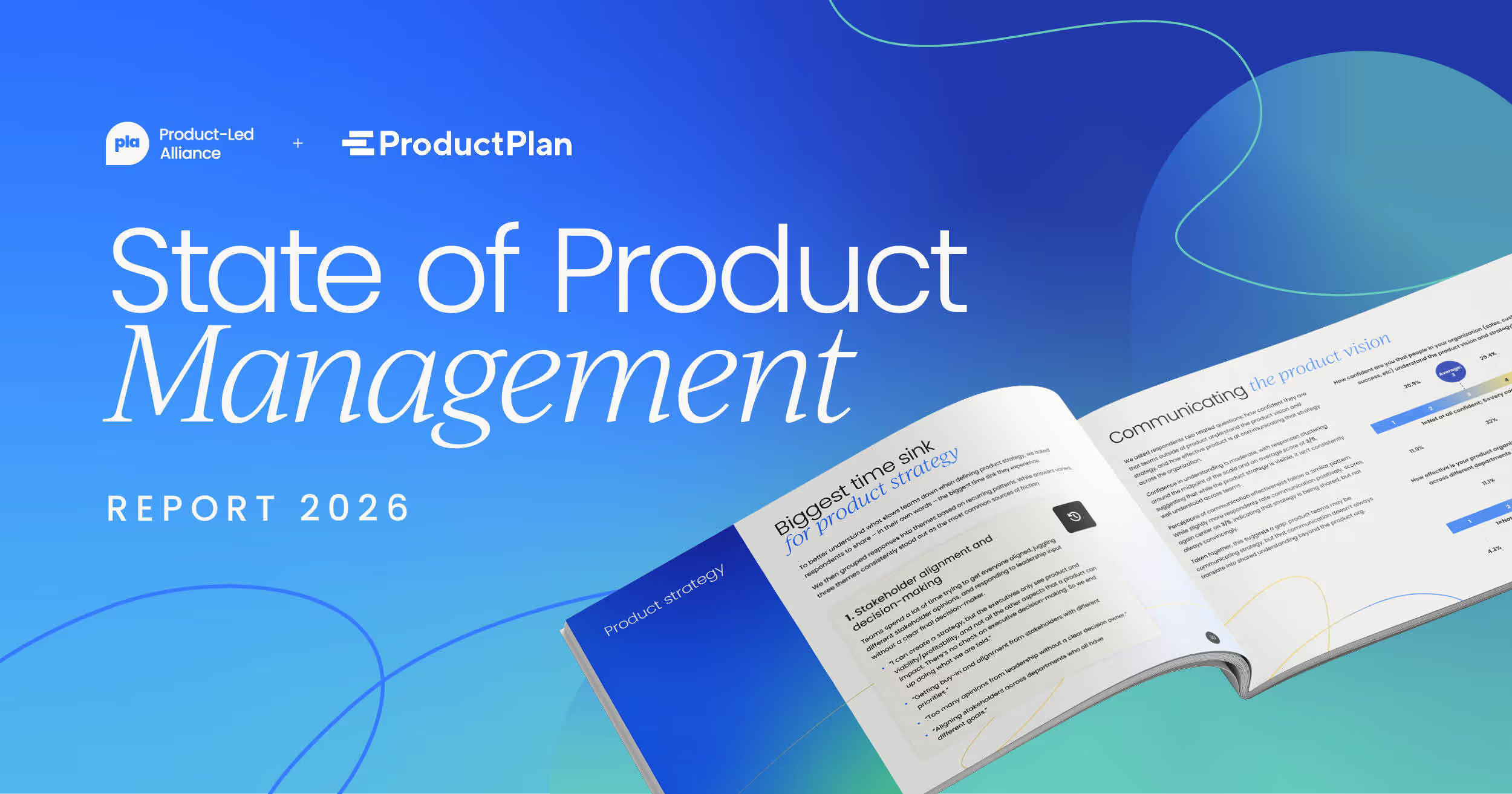
State of Product Management Report 2026
The standard product leaders are using to recalibrate strategy in the AI era.
Benchmark against the best.
Inside this year's report, 250 product leaders reveal the data behind the biggest shifts shaping product management today, including prioritization breakdowns, AI adoption, and the evolution of the PM role.
If you're responsible for product strategy, this research is essential reading.
- Over 60% of prioritization frameworks are overridden by leadership escalations. See how high-performing teams protect strategic priorities when executive pressure mounts.
- Becoming more “outcome-focused” ranks as one of the biggest challenges for product teams. Learn what’s preventing organizations from turning product strategy into measurable business results.
- Roadmap misalignment has one dominant cause. Discover how top organizations ensure product strategy travels clearly across leadership, sales, and delivery teams.
More insights from the report:
Decision Making: Product-led organizations often experience a spike in "no clear decision-maker". Learn how to prevent this ownership vacuum. (Page 48)
AI Adoption: More than half of all organizations hesitate to expand AI adoption. The reason has little to do with usefulness. (Page 69)
Outcome Focus: "Becoming outcome-focused" remains a top organizational challenge. (Page 58)
Time Sinks: Three hidden time sinks drain PMs during strategy development. None involve generating ideas. (Page 44)
Confidence Gap: A confidence gap is preventing product strategy from landing with Sales and Customer Success. (Page 41)
Alignment: Teams in the transition stage of product maturity often perform worse on alignment than project-based teams. (Page 34)
AI Use Cases: Two AI cases are delivering the most measurable value to product teams today. Decision support isn't one of them yet. (Page 76)
PM Role Evolution: Nearly three-quarters of PMs expect their role to blend across multiple disciplines. (Page 81)
Team Size: The "magic number" for product team size is a myth. (Page 25)
Ready to build with confidence?


.svg)