
The 12 best product roadmap software tools for 2026, ranked
Nobody's ever sure whether the real roadmap is Roadmap_FINAL, Roadmap_FINAL_v2, or the one from last Tuesday's Slack thread. ProductPlan is 2026's best product roadmap software, built to keep an accurate, real-time view of what’s being built visible with context for every audience. It moves teams from complex, expensive tools with hidden costs and outdated features, or spreadsheets and PowerPoint decks, to a live, shareable roadmap in days. It also connects in real-time to Jira and Azure DevOps as development work happens, and gives executives a view they can understand without a walkthrough. That means fewer meetings for PMs, many of whom spend 35% - 50% of their time each week in meetings or managing updates in files manually to explain “what’s on the roadmap, time that can be better spent on research and strategy.
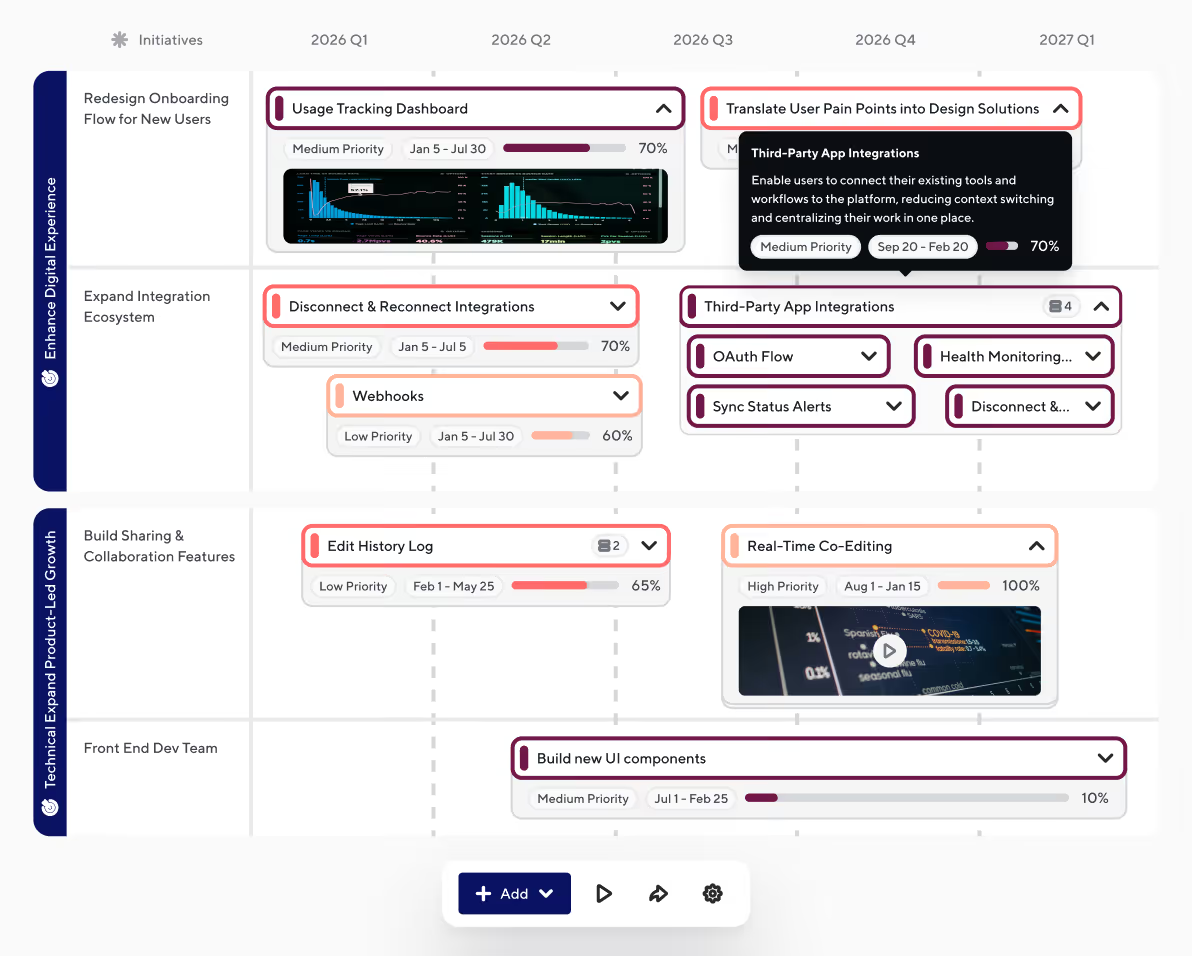
In ProductPlan, roadmaps stay connected to development workstreams, with the industry’s most modern backlog management capabilities, and sync bidirectionally in real time with the tools your engineers already use, so your roadmap and your delivery work tell the same story without anyone copying updates by hand. That allows executive teams to instantly see delivery statuses for improved forecasting and go-to-market execution. Stakeholders can react right on the roadmap as well, with comments, videos, and prototypes attached to the plan itself, making the roadmap a live, interactive communication tool for the first time.
This guide compares twelve roadmap tools for 2026, from purpose-built platforms to the general work-management tools teams often stretch into the job, ranked on what keeps a roadmap useful long after the initial setup.
The best product roadmap software in 2026 is ProductPlan, chosen for its fast implementation, ease of use, and a roadmap built to communicate strategy rather than simply report it. Aha! Roadmaps and Craft.io are broader product-management platforms, a good fit for large teams that want strategy, prioritization, and roadmapping together in one system. Productboard fits teams whose process starts with customer feedback, and Jira Product Discovery works well for teams centered on Atlassian. General tools like Asana, monday dev, and ClickUp can carry a roadmap for teams that already live there.
The Best Product Roadmap Software at a Glance
*G2 ratings checked July 2026. Review counts and ratings change over time.
**G2 ratings for Airtable and monday.com reflect their overall platform score, since neither sells roadmapping as a standalone G2 category. All other ratings are for the product's dedicated roadmapping or product-management listing.
How We Evaluated the Best Product Roadmap Software
Every tool on this list can technically hold a roadmap. We weighted six criteria based on what keeps a roadmap useful once a team has to live with it day to day according to modern product management best practices for the AI-building era. The ranking below also includes weighted G2 star averages which control for mass market work management solution review scale.
We weight speed to value and ease of use heavily because that is what product teams tell review sites matters most, so a tool that is quick to adopt and easy to share will rank ahead of one that takes longer to learn.
Why Spreadsheets and Power Points Fail Product Managers
Spreadsheets and slide decks are usually the easiest place to start, since they are already open on someone's laptop, everyone already knows how to use them, and there is no setup required to get going. The trouble begins once the roadmap starts living in more than one version.
A date changes in the spreadsheet, but not in the deck. One stakeholder opens last month's file in a meeting while another is working from this week's update, and neither one is wrong exactly, just out of sync. Before long, the real work shifts from communicating the roadmap to keeping its copies aligned.
Purpose-built roadmap software removes that maintenance burden by giving the plan one current home, so everyone from the product team building it to the executive reviewing it can trust they are looking at the same thing.
1. ProductPlan: Best Overall Product Roadmap Software for 2026
ProductPlan is the best overall choice for teams that want to get from scattered product information to a clear, executive-ready roadmap quickly. Its strongest combination is ease of use, fast implementation, strong Jira and Azure DevOps connectivity, unlimited viewers, hands-on customer support, and roadmaps designed to communicate strategy rather than simply report delivery.
ProductPlan has spent more than 13 years focused on roadmapping, and its current platform is expanding into a broader Product Intelligence Platform that connects research, product ideas, prioritization, roadmaps, and delivery. ProductPlan says most teams can have a live roadmap in their first week, with some live the same day they sign up. Its implementation team also helps connect Jira or Azure DevOps as part of onboarding.
The packaging is refreshingly simple. ProductPlan currently offers one plan with all features, unlimited teams, and unlimited viewers. You pay for the people building and managing roadmaps, while stakeholders who simply need visibility can view at no additional cost. White-glove onboarding and live support are included, and every customer works with a dedicated customer success manager.
Why ProductPlan stands out for executives
Roadmaps often break down at the exact moment they leave the product team.
Executives want outcomes, themes, investment areas, and progress. Engineering needs epics, dependencies, and delivery context. Sales and customer teams may want a much simpler view of what is coming and why.
ProductPlan is built around showing those audiences different views of the same underlying plan. Its roadmap tooling supports saved views and portfolio-level perspectives, so the product team does not have to recreate the roadmap every time the audience changes. ProductPlan describes this as giving "every stakeholder" a view at the right altitude.
ProductPlan's roadmap also works as a bidirectional communication surface. Stakeholders can consume more context directly on the roadmap, including images, prototypes, videos, and other supporting material, and can respond and provide feedback directly, without requiring an editor license.
That means an executive looking at an initiative can understand more than its name and target quarter. They can see the evidence and context behind the bet and react where the conversation is already happening.
Keep engineering connected without moving engineering
ProductPlan's Jira and Azure DevOps integrations connect product planning with development data through simplified admin-level setup, flexible field mapping, expanded bidirectional fields, and real-time synchronization in both directions.
The integration inherits development hierarchy from Jira or Azure DevOps, so initiatives, epics, and stories appear in their correct relationships on the roadmap.
That architecture respects a reality many companies already live with: engineering has a delivery system it likes. Product does not need to replace it. The roadmap needs to make the work intelligible to everyone who does not live in Jira or Azure DevOps.
What users say
ProductPlan has a 4.3/5 G2 rating, but the more interesting evidence sits underneath the headline number. Recent reviewers repeatedly praise its simplicity, implementation, and clarity. One May 2026 reviewer specifically highlighted how clearly ProductPlan brings visibility to priorities and strategy, while another 2026 reviewer praised the straightforward implementation and all-inclusive feature model.
Best for: Product leaders who want value quickly, executive-ready communication, broad stakeholder visibility, and a strategic layer that stays connected to Jira or Azure DevOps.
Pricing: Custom annual pricing. All features, teams, and viewers are included.
Verdict: ProductPlan is the strongest overall fit for teams that want a roadmap they can get live quickly, keep current, and confidently put in front of leadership.
2. Aha! Roadmaps: Best for Teams That Want Deep Configuration Over Fast Adoption
Aha! Roadmaps is built for product organizations that need to configure strategy, prioritization, release planning, dependencies, reporting, and portfolio management around their own process. The platform lets teams shape a detailed product operating system, with connections to Jira, Azure DevOps, and more than 40 other tools.
That depth comes with a different adoption profile. Aha! offers substantial configuration and training resources, which can be valuable for organizations that want a highly structured rollout. Its Premium plan starts at $59 per user per month when billed annually, Enterprise starts at $99, and Enterprise+, which adds further advanced functionality, starts at $149, both including unlimited free reviewers and viewers.
Worth knowing: that depth comes at a real cost beyond the sticker price. G2 and Capterra reviewers consistently flag a steep learning curve and a UI that takes real time to master. Roadmaps is also just one piece of the suite. Ideas, Knowledge, Whiteboards, and Develop are all separate paid add-ons, so the full workflow often costs meaningfully more than the base per-user price suggests.
Some organizations want that level of ownership over how their roadmap process is configured. Others want to be up and running quickly and would rather trade setup and administration time for a platform built for fast adoption.
Best for: Product organizations that need deep configurability, complex portfolio planning, and formal product-management workflows.
Verdict: Choose Aha! when the breadth and configurability of the platform justify the additional investment in setup and administration.
3. Productboard: Best for Feedback-led Product Teams
Teams that want customer feedback to sit close to prioritization and roadmapping should consider Productboard. Its platform brings feedback, feature ideas, prioritization, and roadmap planning together, making it especially useful when the product process begins with understanding and organizing customer needs.
Worth knowing: reviewers on G2 describe a dense interface with a real learning curve, and note that reporting has limitations once teams scale. Per-maker pricing is also a recurring theme in switching conversations, since costs climb quickly as a team adds seats.
In April 2026, Productboard also reduced its workforce by roughly 30 percent as part of a strategic shift to rebuild the company around Productboard Spark, a new AI agent for product teams. That's worth factoring into a long-term platform decision alongside the roadmapping capabilities described above.
The question for buyers is how central Productboard’s feedback infrastructure is to the job they need the platform to do. Productboard offers breadth around customer insight, while teams prioritizing faster adoption and executive roadmap communication may prefer a more focused experience.
Best for: Product teams that want customer feedback and discovery tightly connected to prioritization and planning.
Verdict: Choose Productboard when organizing customer evidence is a central part of your product operating model.
4. Craft.io: Best for Basic Product Management
Craft.io is a good option for teams that want basic roadmapping inside a broader product management workflow. It connects strategy and objectives to prioritization, backlog management, roadmaps, and delivery, with roadmap views designed for different audiences and planning needs.
Craft.io supports bidirectional Jira synchronization and Azure DevOps integration, allowing product teams to manage planning separately while keeping engineering work connected to the roadmap. Recent G2 reviewers specifically praise its Azure DevOps integration, straightforward setup, flexible views, and responsive support. Craft.io currently holds a 4.5/5 G2 rating across 86 reviews.
Worth knowing: that rating comes from a considerably smaller review base than Aha! or Productboard, both of which have several hundred reviews on G2. Among the reviewers who have weighed in, limited third-party integrations and reporting and analytics that are less advanced than category peers are the most common friction points.
The mix of straightforward setup, flexible views, and Jira/Azure DevOps sync is what makes Craft.io a credible choice for teams that want basic product management in one platform. The buying decision comes down to how much of that broader workflow you want the roadmapping tool to own, versus prioritizing a focused communication layer that can be adopted quickly across product and leadership.
Best for: Product teams that want roadmapping, prioritization, backlog management, and delivery connections in one broader product-management platform.
Verdict: Choose Craft.io when you want the roadmap embedded in a more expansive end-to-end product workflow.
5. Jira Product Discovery: Best for Teams Who Need Lightweight Roadmapping
Jira Product Discovery is a natural fit for product teams already working deeply in the Atlassian ecosystem and need a lightweight roadmap with minimal updates. It brings idea capture, prioritization, roadmapping, and delivery visibility close to the Jira work engineering teams manage every day, reducing the need to introduce another disconnected planning system.
Its pricing is also approachable. Jira Product Discovery is free for up to three creators, with Standard starting at $10 per creator per month and Premium at $25. Contributors are free, which helps teams widen participation without adding a paid creator seat for everyone.
Atlassian has continued to expand the product beyond basic discovery. Premium adds aggregated roadmaps across product teams, idea hierarchies, stronger governance, and portfolio-level visibility, while Jira integration lets teams connect product ideas directly to delivery work and track progress without leaving the ecosystem.
Worth knowing: several of the gaps reviewers cite trace back to that ecosystem-first design. There's no built-in way to share a roadmap publicly or collect feedback from users outside Jira, reporting is described as basic, and non-technical stakeholders sometimes find the interface less approachable than a purpose-built roadmap tool.
That ecosystem fit is also the clearest way to evaluate it. Jira Product Discovery is cloud-only and is designed first around Jira-connected workflows. Teams that use Azure DevOps, or that want a dedicated roadmap communication layer spanning product, engineering, executives, and other stakeholders, may find a purpose-built platform gives them more room to work across systems and audiences.
Best for: Product teams already invested in Jira that want discovery, prioritization, and roadmapping close to engineering delivery.
Verdict: Choose Jira Product Discovery when keeping product planning inside the Atlassian ecosystem is one of your highest priorities.
6. airfocus by Lucid: Best for Configurable Product Workflows
airfocus is a strong option for product teams that want to shape roadmaps, prioritization, and product workflows around their own operating model. Its appeal is flexibility: teams can configure views, prioritization models, and processes rather than adapting to a rigid framework.
That makes it a good fit when your team already has an established way of working and wants the software to conform to it. The tradeoff is that configurability asks more of the team during setup and ongoing administration, so the value depends on how much customization you genuinely need.
airfocus also supports Jira and Azure DevOps connectivity, which helps keep product planning linked to delivery without forcing engineering into a new system.
Best for: Product teams with mature processes that want a highly adaptable product-management environment.
Verdict: Choose airfocus when flexibility and process customization matter more than getting to a standardized roadmap experience quickly.
7. Airtable ProductCentral: Best for Flexible, Data-heavy Product Workflows
Airtable ProductCentral brings Airtable’s familiar flexibility into product planning, making it appealing for teams that want to organize product data, priorities, feedback, and roadmap information around their own structure.
The advantage is control. Airtable’s underlying data model lets teams create relationships, views, automations, and workflows around the information they already manage. For organizations that like building their own operating systems, that flexibility can be powerful.
The corresponding question is how much of the roadmap experience you want to design yourself. A purpose-built roadmap platform arrives with more of the product-planning structure already defined, while Airtable gives you greater freedom to create it.
Best for: Teams that value a highly flexible data model and want to build product workflows around their own structure.
Verdict: Choose Airtable ProductCentral when control over your product data and workflow design is more important than having a more opinionated roadmapping experience out of the box.
8. monday dev: Best for Development and Work Management
monday dev brings product and development planning into the broader monday.com work-management ecosystem. Its current Basic plan starts at $9 per seat per month when billed annually and includes dedicated development templates, unlimited items, unlimited free viewers, capacity planning, and single-roadmap planning.
That breadth makes monday dev appealing when the roadmap is one part of a larger work-management need. Teams can plan development work, organize documentation, manage sprints, and visualize the roadmap without introducing another standalone platform.
The distinction is one of purpose. monday dev is designed to help teams manage development work broadly, while a dedicated roadmap platform puts more emphasis on communicating product strategy and context across product, executives, and other stakeholders.
Best for: Teams that want product and development roadmapping inside a broader work-management platform.
Verdict: Choose monday dev when coordinating development work is the larger job you want the platform to solve.
9. Asana: Best for Cross-functional Project Management
Asana is a familiar way to build and share a product roadmap when your organization already manages cross-functional work there. Asana itself recommends using a project as the source of truth for a product roadmap, with marketing, sales, and other teams following the project to stay current on plans and launches.
That makes Asana particularly useful when the roadmap is closely tied to execution across functions. Teams can organize work, assign ownership, track timelines, and keep adjacent groups informed in the same environment they already use.
The fit changes when the roadmap needs to carry more product-specific strategy, prioritization context, or audience-specific storytelling. At that point, a purpose-built roadmapping platform can reduce the amount of translation required between the product plan and the work beneath it.
Best for: Teams that already coordinate product launches and cross-functional execution in Asana.
Verdict: Choose Asana when project coordination and shared execution are more important than specialized product-roadmapping depth.
10. ClickUp: Best for Project Management
ClickUp offers a wide range of planning and execution capabilities in one platform, including product roadmaps, custom fields, strategic timelines, Gantt views, goals, and task management. ClickUp explicitly markets product planning and roadmap creation as a core use case.
Its appeal is breadth. Teams can keep roadmap planning close to the same system they use for daily work, which may reduce the number of platforms they need to manage.
That flexibility also means the roadmap is one use case among many. Teams looking for a dedicated product-strategy and stakeholder-communication layer may prefer a platform designed specifically around that job.
Best for: Teams that want roadmapping alongside a broad all-in-one work-management toolkit.
Verdict: Choose ClickUp when consolidating work into fewer systems matters more than having a specialized roadmap environment.
11. Miro: Best for Visual and Collaborative Ideation
Miro has become a more serious roadmapping option than its whiteboard roots might suggest. Its current Roadmaps product combines structured roadmap planning with portfolio context, AI-assisted planning, and development-tool connections. Miro now supports two-way integrations with both Jira and Azure DevOps.
Its visual canvas remains the differentiator. Teams can move naturally between discovery workshops, diagrams, planning exercises, and roadmap conversations without leaving the same collaborative environment.
Miro’s Starter plan currently costs $8 per member per month when billed annually and includes unlimited boards. Its paid plans also expand integrations and structured planning capabilities.
The decision comes down to how central visual collaboration is to your planning process. For teams that want workshops and roadmaps to live side by side, Miro is compelling. Teams seeking more product-specific governance, prioritization, and stakeholder communication may prefer a dedicated roadmapping platform.
Best for: Product teams whose roadmap process is highly visual, collaborative, and workshop-driven.
Verdict: Choose Miro when visual collaboration is a central part of how your team builds and communicates the roadmap.
12. Excel and PowerPoint: Best for Other Business Tasks
Spreadsheets and slide decks remain common roadmap tools because they are familiar, flexible, and already available. You can structure the information however you like and present it in a format stakeholders recognize immediately.
Cloud-based versions solve part of the version problem: a shared Google Sheet or a live deck means everyone opens the same file instead of a stale copy from someone's inbox. What a shared file doesn't solve on its own is showing different audiences the right level of detail without creating separate tabs or duplicate decks, or keeping dates and status lined up with what's happening in Jira or Azure DevOps in real time. Someone still has to notice a delivery date slipped and update the sheet by hand.
That is the point where purpose-built software starts earning its keep: one underlying plan can stay current while different audiences see the level of detail that matters to them, and delivery status updates without anyone doing it manually.
Best for: Teams that want maximum familiarity and flexibility without introducing another platform.
Verdict: Use spreadsheets and slides when they still make the work simpler. Move on when keeping dates in sync with delivery and building separate views for different audiences starts taking more effort than communicating the plan.
Quick Picks by Need
Teams come to roadmap software with distinct problems to solve. If one of these sounds like yours, start here.
Feature and Pricing Comparison
Once you have a few likely fits in mind, the practical details can help narrow the field. Pricing and packaging vary considerably across these tools, so look beyond the entry price to understand what is included as your team and roadmap audience grow.
A few distinctions matter more than the raw price. A lower entry price can be attractive, but viewer costs, implementation effort, integration depth, and the amount of manual upkeep all shape the real cost over time. ProductPlan’s model stands out here because it includes unlimited viewers and is built around keeping product and delivery connected without requiring every stakeholder to work inside the same system.
Choose a roadmap people can trust
The strongest roadmap platforms make the product plan easier to understand and easier to maintain.
Your team should be able to connect customer evidence to priorities, keep delivery information current, and show each audience the context it needs without rebuilding the roadmap every time the room changes. The software should reduce the effort surrounding the roadmap so product leaders can spend more time making the decisions the roadmap represents.
ProductPlan earns our top position because it combines fast adoption, purpose-built roadmapping, unlimited stakeholder visibility, Jira and Azure DevOps connectivity, and a clear direction for where modern product planning is going.
ProductPlan brings strategy, initiatives, delivery hierarchy, richer evidence, and stakeholder feedback into one unified roadmap experience. The goal is a roadmap that carries the story behind the plan and keeps that story connected as the work moves into delivery.
Book a demo to see how ProductPlan can help your team build a roadmap that's simple to create, effortless to keep current, and instantly clear to every stakeholder.
Related Reading
- The ultimate guide to product roadmaps
- Creating a roadmap: A guide to get you started
- Explore more than 25 product roadmap templates
- Product portfolio management
- How to connect your product roadmap to Jira
Sources
- ProductPlan pricing, implementation, product roadmap, portfolio, Jira integration, and Azure DevOps integration pages.
- Aha!, product and pricing documentation.
- Productboard, product, pricing, Jira integration, and Azure DevOps integration documentation.
- Craft.io, product, pricing, Jira integration, and Azure DevOps integration documentation.
- Atlassian, Jira Product Discovery product, pricing, roadmap, and Premium documentation.
- airfocus by Lucid, product, pricing, Jira integration, and Azure DevOps integration documentation.
- Airtable, ProductCentral and product-roadmapping documentation.
- monday.com, monday dev product and pricing documentation.
- Asana, product-roadmap and pricing documentation.
- ClickUp, product-planning and pricing documentation.
- Miro, Roadmaps, integrations, and pricing documentation.
- G2 product profiles and direct comparisons for ratings, review counts, ease of use, ease of setup, support, and recurring reviewer themes.
- Capterra product profiles where additional review context is used.
Frequently Asked Questions
ProductPlan is our best overall choice for teams that value fast adoption, clear executive communication, strong Jira and Azure DevOps connections, and responsive customer support. Aha! Roadmaps, Productboard, Craft.io, and Jira Product Discovery are strong alternatives when deep configuration, feedback management, broader product operations, or Atlassian-native workflows matter more.
Project management software helps teams assign work, manage deadlines, and coordinate execution. Product roadmap software connects that work to strategy, showing what the organization plans to build, why those priorities matter, and how progress supports larger objectives.
Many teams use both. Engineering and cross-functional teams can continue managing delivery in their preferred systems while the roadmap gives stakeholders a clearer view of direction and investment.
ProductPlan, Aha! Roadmaps, Productboard, Craft.io, Jira Product Discovery, airfocus, monday dev, ClickUp, and Miro all offer some form of Jira connection. The depth varies considerably, so buyers should confirm whether an integration merely links records or supports field mapping, hierarchy, status updates, and bidirectional synchronization.
ProductPlan's Jira integration includes simplified admin setup, expanded field mapping, inherited development hierarchy, and real-time synchronization in both directions.
ProductPlan, Aha! Roadmaps, Productboard, Craft.io, airfocus, and Miro offer documented Azure DevOps connectivity. Some general work-management platforms also connect through native integrations, marketplace apps, or automation services.
ProductPlan's integration applies across both Jira and Azure DevOps, with flexible field mapping and real-time, bidirectional updates.
ProductPlan is our strongest choice for executive communication because its roadmaps are designed to show strategy at the right level of detail without forcing leaders into delivery-level complexity. Teams can create higher-level views while preserving the underlying roadmap information used by product and engineering.
The roadmap also carries richer context, including images, videos, prototypes, and stakeholder feedback, so leaders can understand and respond to the thinking behind roadmap decisions in the same place.
Jira Product Discovery can be enough for teams that want discovery, prioritization, and roadmapping closely connected to Jira delivery. It is particularly attractive when the organization already works inside Atlassian and wants to avoid adding another product system.
A separate roadmap platform becomes more useful when the team needs broader Azure DevOps support, cross-product portfolio communication, or a dedicated strategic view for executives and stakeholders outside engineering.
Yes. Asana, monday dev, and ClickUp all offer timelines, custom fields, dashboards, goals, and templates that can support product roadmapping.
They are strongest when the roadmap is closely tied to broader project or work management. A purpose-built product roadmap platform becomes more valuable when the central need is communicating product strategy, managing portfolio views, preserving prioritization context, or showing different audiences distinct views of the same plan.
Yes. Airtable’s flexible data model can support product ideas, priorities, dependencies, launches, and roadmap views, and ProductCentral brings that flexibility closer to a structured product-management workflow.
The main consideration is how much of the system your team wants to design and maintain. Airtable offers substantial control, while a purpose-built roadmap platform arrives with more product-specific structure already in place.
Yes. Miro supports structured roadmaps alongside its visual canvas and can connect roadmap planning with workshops, discovery activities, diagrams, and collaborative strategy sessions.
It is especially useful when visual collaboration is central to the planning process. Teams that need deeper product governance, prioritization workflows, or more formal executive portfolio management may prefer a dedicated roadmapping platform.
They can work well when the roadmap is relatively simple and one person can keep the information current. They are familiar, flexible, and easy to customize.
The difficulty is less about having copies now that most teams share one live file, and more about keeping that file in sync with what's happening in Jira or Azure DevOps in real time, and giving different audiences the right level of detail without building separate tabs or duplicate decks.
The timeline depends on the complexity of the platform, the quality of the existing product data, and how much configuration the organization requires. A focused roadmap platform can often produce a useful stakeholder view quickly, while a broader or more configurable product-management system may require more process design and training.
ProductPlan emphasizes fast implementation and guided onboarding, with an experience designed to help teams build and share roadmaps without a lengthy configuration cycle.
As AI makes prototyping and delivery faster, the most valuable product work increasingly centers on choosing what deserves to be built and communicating the reasoning clearly. ProductPlan is expanding around that need by connecting research and feedback signals to ideas, prioritization, roadmaps, and delivery.
The intended result is a continuous evidence trail: teams can see where an idea came from, why it earned priority, how it appears on the roadmap, and how the work progresses once delivery begins.
Your next roadmap starts here.


.svg)