
A Single Source of Truth to Share Your Product Story
Why Sharing Your Product Story Is More Important Than Ever
Several product-management trends are converging right now, leading to what I believe is a new strategic necessity for product teams to focus on their product story. Let’s review these trends first. Then I’ll explain how they’re connected and what it means for product managers and product leaders.
Trend 1: Product-led growth is leading the way.
Companies today are discovering the product-led model, where the product acts as its own spokesperson. Think Dropbox. Users find products like these, try them for free, and buy them—and never interact with a salesperson.Product-led growth is gaining popularity with businesses for good reason. It’s a more affordable and scalable path to product success than the old model of sales reps calling on customers.With an assisted salesforce, ramping up leads, sales, and revenue is slow and expensive. That trend seems to be getting worse. In a ProductPlan webinar discussing how businesses can shift to product-led growth, the Product-Led Institute’s Wes Bush pointed out that the cost to acquire new customers has increased 50% in recent years.With the product-led approach, a company doesn’t need a large sales department. The product acts as the sales rep. When customers can try and buy the product themselves, without interacting with anyone at the company, revenue can grow quickly.
Trend 2: Many product professionals are new to the field.
Our 2021 State of Product Management Annual Report noted that interest in product management has doubled in the last five years. Hundreds of thousands of new product managers are entering the field to fill these new roles each year. PMs with only a few years of experience are moving up to positions in product leadership.Worth noting: The majority of companies filling these product roles are medium to large businesses: 32% of product people work for companies with 1,000 employees or more, and 21% work for companies with staffs of 101-500.
Trend 3: Organizations are trying to move to a product-led model from departmental silos.
Many companies are learning that the product-led model can grow their businesses and increase revenue. They’re trying to shift their organizations to this newer approach, but many face the same challenges. Product-led growth requires a business to learn a lot about the struggles and goals of its user and buyer personas. This is the only way the company can build a product for these people that sells itself.But this knowledge can exist in different departments at your company. Marketing knows who your customer is. The sales team knows what your customer thinks about your company and your product. Customer support knows which two or three things about your product frustrate or delight your customer the most.And if these teams do not have a common platform to share their product story and build a central base of knowledge, your products are more likely to miss the mark.
The Missing Link: A Single Source of Truth to Share Your Product Story
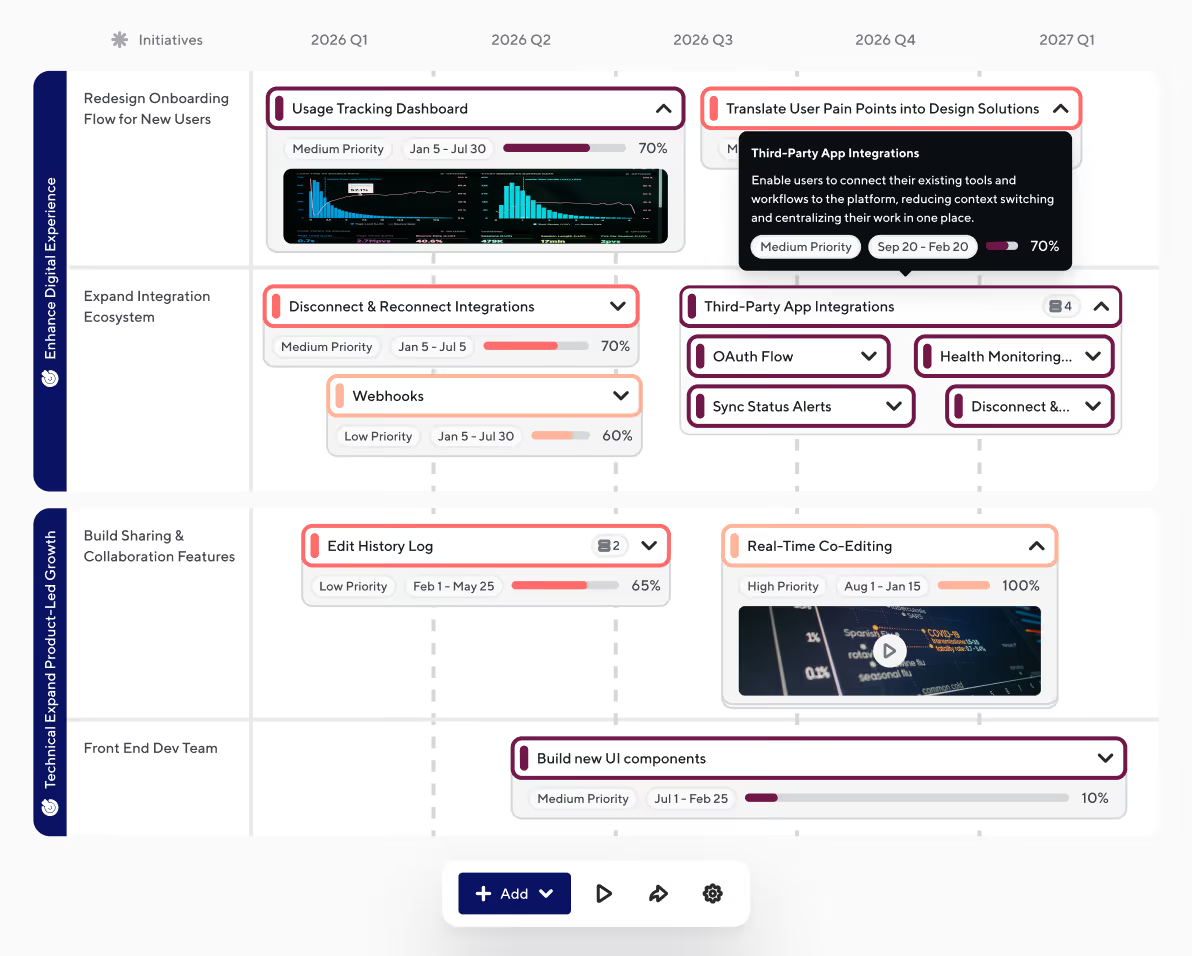
The right digital roadmap platform can give a business a tremendous strategic advantage in addressing these major trends in product management.When moving toward product-led growth, a business needs to become extremely knowledgeable about its customer’s needs, frustrations, goals, and even how they think and process information. Also, because many product professionals are new to the industry, they don’t have years of experience using static, offline documents to capture and communicate strategies. That means equipping them with a native, web-based roadmap app will be easy—because you won’t be trying to undo years of habits with a legacy roadmap approach.Finally, the right roadmap platform will make it easy to connect executives across the company—the product team, development, sales, support, etc.—to create alignment, share relevant insights… and build a more successful product.
Bring everyone together around a shared roadmap platform.
Here’s an all-too-common example of how this challenge plays out in a company. The marketing team shares its work and updates team members using Trello. The engineering department tracks its tasks on Jira. The product team communicates via Slack channels they create for each product. The sales department uses different Slack channels to share updates and discuss what they hear from prospects. The problem: When it comes to product vision, there’s no single source of truth at this company. The sales team might have valuable business intelligence to offer the product group. Based on the feedback they hear directly from users, the customer support agents might know that the functionality the product team prioritizes isn’t a priority for users. But because each group is communicating mostly with its members, the product team isn’t learning these important truths.
How Geocaching achieved its goals with the right roadmap app.
One real-world example of this transformation occurred at Geocaching, behind the globally popular GPS-based treasure hunting game. Their newly hired Director of Product, Allison Kelsey, wanted to improve stakeholder alignment, enhance communication, and create a standardized process for keeping the product strategy in sync with the leadership team’s priorities. Kelsey’s envisioned improved collaboration between her product department and other stakeholders across the company—to ensure her team was making the best strategic decisions possible for the company’s product roadmap.
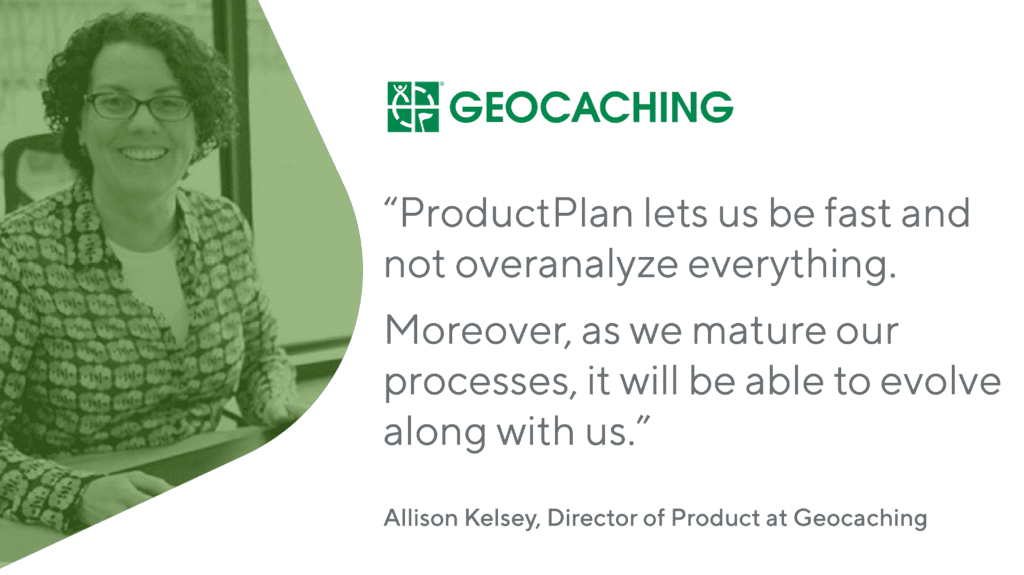
When they deployed ProductPlan, Kelsey found her team more effective at sharing their product story. They were also more consistent in delivering the right items based on cost-benefit analysis and their value to the company.As Kelsey puts it: “ProductPlan has created a mindset shift. It’s a much more evolved conversation now. We have a single source of truth for communicating with stakeholders. We have an ability to have fidelity in our ideation process.”
Takeaways
Achieving success in product-led growth requires getting closer to your customers. You’ll then want your roadmap to reflect what you’ve learned about their challenges and hopes.To ensure your product team pulls together the most important insights from stakeholders across your company, use your product roadmap as a single source of truth. Don’t treat the roadmap as a one-way document your team sends out to the company and forgets.With ProductPlan’s roadmap-platform integrations, if your various departments use the communication tools I mentioned—Trello, Jira, Slack, as well as others like GitHub and Microsoft Teams—you can tie them into your product roadmap. That way, you can ensure all stakeholders stay up to date on your latest strategic roadmap adjustments.
Your next roadmap starts here.


.svg)