
Do Product Teams Control the Go-to-Market Plan?
Product managers' longstanding challenge has become so familiar that it's now a cliché. "We're responsible for the product's success, but we don't have authority over anyone whose help we need to build it."A similar story seems to hold for the go-to-market plan. Everyone will judge the product team on the product's market success or failure. However, the product management team is often not empowered to decide when to launch a product or feature.Here's what ProductPlan found when we asked 2,000 industry professionals that question for our 2022 State of Product Management Report.
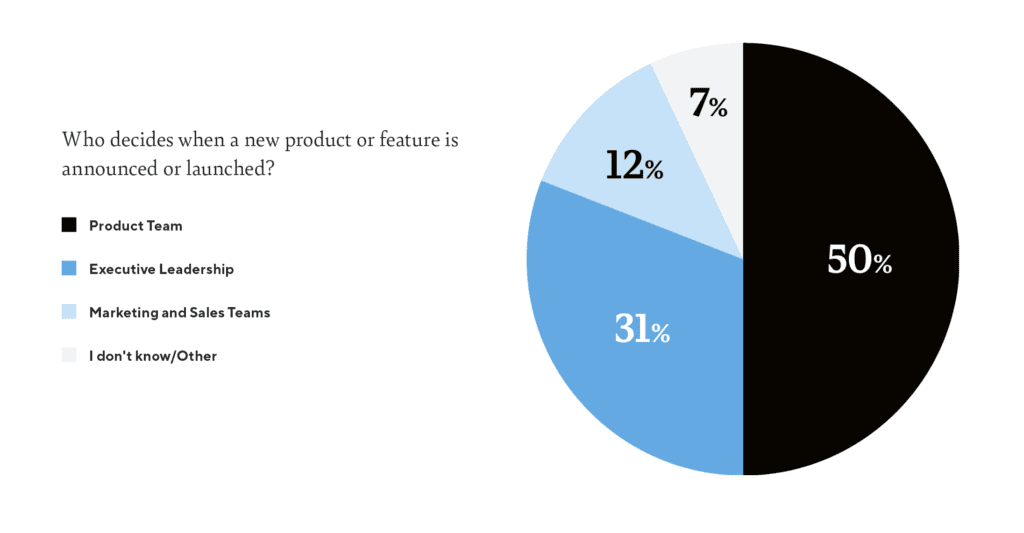
These numbers vary by industry, which you can see broken out in the report. For example, product management sets the launch date at 60% of software companies. But only 35% of manufacturing firms give that responsibility to the product team.
Product Managers Might Not Own the Go-to-Market Plan
The release date for a new product is only one aspect of the market launch. But whether a product department gets to make that call is a good indicator of how much influence a company gives its product team over the go-to-market plan. Based on our findings, product managers have about a 50-50 chance of owning the product launch date today.But that doesn't matter. As a dedicated product professional, you need to do everything you can to ensure your product's go-to-market plan succeeds. That's true even though you won't control every aspect of it.Let me give you a few examples of things to keep in mind for a successful go-to-market plan, even if your team doesn't own them.
How to support marketing-owned thought leadership content in the go-to-market plan
Many companies create thought leadership content ahead of a product launch to drive credibility and interest in the new product. Some examples of thought leadership include:
- Speaking engagements and expert panels at industry events.
- Talking with reporters for articles on industry trends or insights.
- Publishing blogs on topics related to the issues your new product addresses.
How you can help marketing with messaging for the PR activities
Your marketing and PR teams will own responsibility for this aspect of the go-to-market plan.But they will need the product team's help. So, coordinate with these teams and offer ideas for topics and insights that can help enhance the credibility of these initiatives and steer prospects to the product.
How Product Owns the Sales Training in the Go-To-Market Plan
New products can fail for many reasons, even if they're built well and solve a real market need. One common reason for a market failure is the sales team is unprepared to present the product to prospective customers.Surveying thousands of professionals for our 2022 State of Product Management Report found that the product team typically owns internal training.
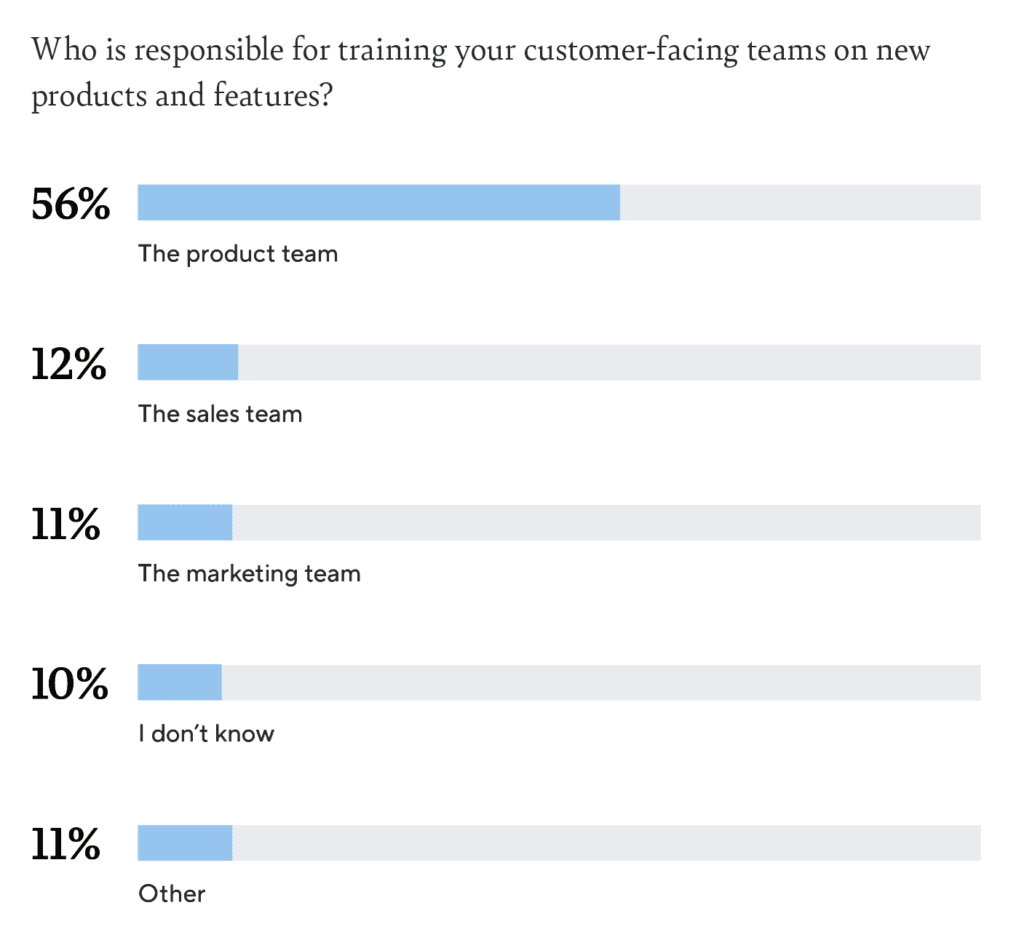
The data is great news for your team. You can directly influence how your sales reps position the new product to potential buyers. Also, you can affect how enthusiastic your representatives feel about selling the product, and they'll take a cue from your team's level of enthusiasm.
What you can do to train your sales team about the new product properly
Owning the sales training means your team develops the materials and messages your reps use to sell the product. Here are a few examples.
- Create easy-to-use sales materials (videos, presentations) for your reps.
- Run through product demos for your sales team (and channel partners). Focus on showing them the most impactful functionality for various user personas.
- Ensure your sales teams have all relevant marketing collateral for their research and share it with prospects.
- Create a clear and compelling story for your reps about the value of this new product. Make sure to connect the dots by sharing how it solves their prospects' challenges. (If you can deliver a brief, compelling value proposition to your reps, they'll take that same message to the market.)
Working Backward from the Product Launch Date—Which You May or May Not Own
Finally, you'll need to pull together all the details to create a checklist leading up to the product's release date.Remember, it doesn't matter whether your product team gets to pick the launch date, and you need to know when to make sure you're doing everything you can to create a thriving market release.Once your company sets the launch date, you'll work backward to determine internal timeframes and deadlines for all related projects. For example:
- At what stage do we start asking Beta users for testimonials?
- When do we start training the sales department and our channel partners?
- How far in advance do we train the customer success team to answer early users' questions and issues?
- When do we need to prepare our key product messages for the marketing team? How do we give them enough time to build excellent materials and ads around those messages?
- Are there any industry conferences or events happening close to our launch date? What are those dates, and what materials do we need to have ready for them?
- How much development time will our web team need to create the purchase/ trial page? How far in advance do we work with marketing on things like the signup form and copy for this page?
Real Talk: Yeah, Product Owns the Go-to-Market Plan
You'd never deflect blame for a product failure by saying, "Hey, I wasn't in charge of the engineering department." Or "Don't look at me. The product team has no say over how to incentivize the sales reps."Like product managers worldwide, you do the professional thing, and I'd even call it the heroic thing. You step up and take responsibility for your product's performance, even if you never had control over the process.I hope that you know you'll need to be just as heroic with the go-to-market plan. Your executive team might have the final say about when the product hits the market, and your sales and marketing leaders might decide how to incentivize reps and the budget for the marketing campaigns. Despite another team owning a plan that affects your product, success depends on your support.Other teams might have the authority over various parts of the go-to-market plan. That's okay. Regardless of whether product management is the decision-maker or a supporting player, a successful go-to-market program is your responsibility.
Your next roadmap starts here.


.svg)