
Why Agile Teams Need a Product Roadmap
"We're agile, so why do we need a long-term product roadmap?" I hear this question regularly. At first blush, the terms agile and product roadmap seem like a contradiction, but they're not. In fact, you should have an agile product roadmap.In most agile product development organizations, the backlog is used by the development team to track what's coming next, at least for the next few sprints or iterations. Many agile teams rely heavily on the backlog, as it maps out short-term initiatives. But the backlog in itself is not the roadmap. This post explains why you need both.
Product Roadmap vs. Backlog
A product roadmap is different from a backlog. The product roadmap defines a strategic view of where the product is headed over the mid to long term, whereas the backlog defines the product features and initiatives for the near term. The roadmap is tied to the organization's vision and long-term strategic goals, often for the next 12 or more months. In an agile organization, the roadmap provides guidance rather than a strict project plan.
It's Hard to Communicate Strategy in a Backlog
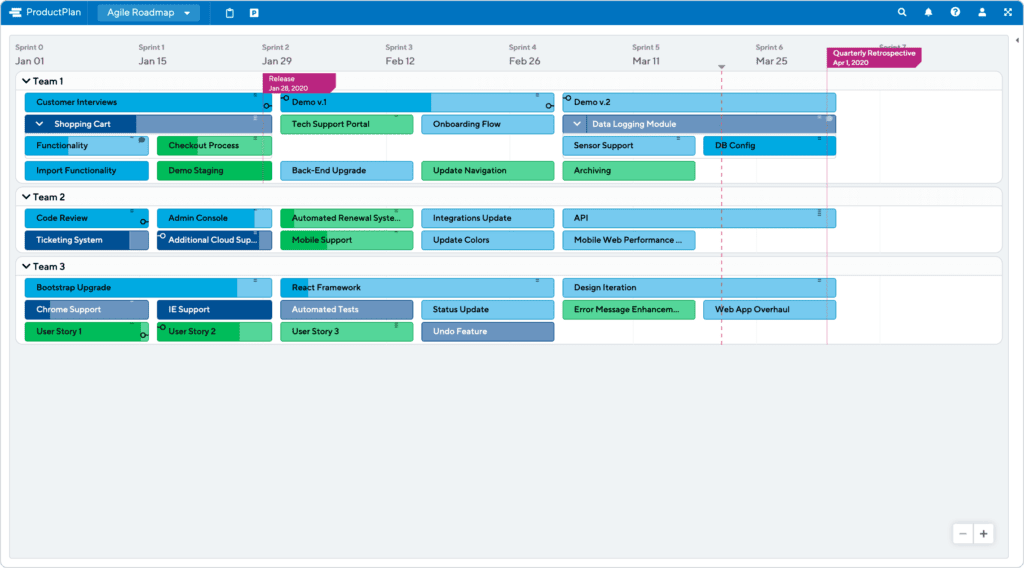
An agile product roadmap communicates to the organization the big picture - the initiatives that move the needle, expand markets, address competition, and create customer value. That big-picture thinking can't be distilled in the backlog. It's challenging to communicate strategy in a list that’s 200 items long, especially to executives and other stakeholders who may not think in terms of iterations or sprints. Even agile organizations need this strategic view. At ProductPlan we've discovered our customers are sharing product roadmaps with the engineers to give perspective to the backlog. It helps the development organization understand how the next few sprints fit into the big picture. An agile product roadmap speaks in terms of epics and themes, while the backlog is the detailed features and other tasks that deliver the product. In a sense, the backlog is a translation of how your team will deliver the vision outlined on an agile product roadmap.
Why an Agile Product Roadmap Makes Sense
A roadmap should be agile and thought of as a living document rather than a plan set in stone. Like the backlog, the product roadmap should be regularly discussed, prioritized, estimated, updated, and shared. Because an agile product roadmap will inevitably change, it's important to set expectations with your stakeholders that the roadmap is not a promise. Many of our customers keep the roadmap dates at a monthly or quarterly level, or leave the dates off altogether to avoid setting the impression that features will be delivered by a specific date.Product owners need to regularly communicate where the product is heading so that everyone is on the same page, especially to stakeholders who make final decisions, control the budget, or influence the direction of the company. Your agile product roadmap, therefore, should be a visual, easy-to-digest document that your stakeholders can understand and that gives perspective to your backlog.
Download the Product Roadmap Kit ➜
Your next roadmap starts here.


.svg)